
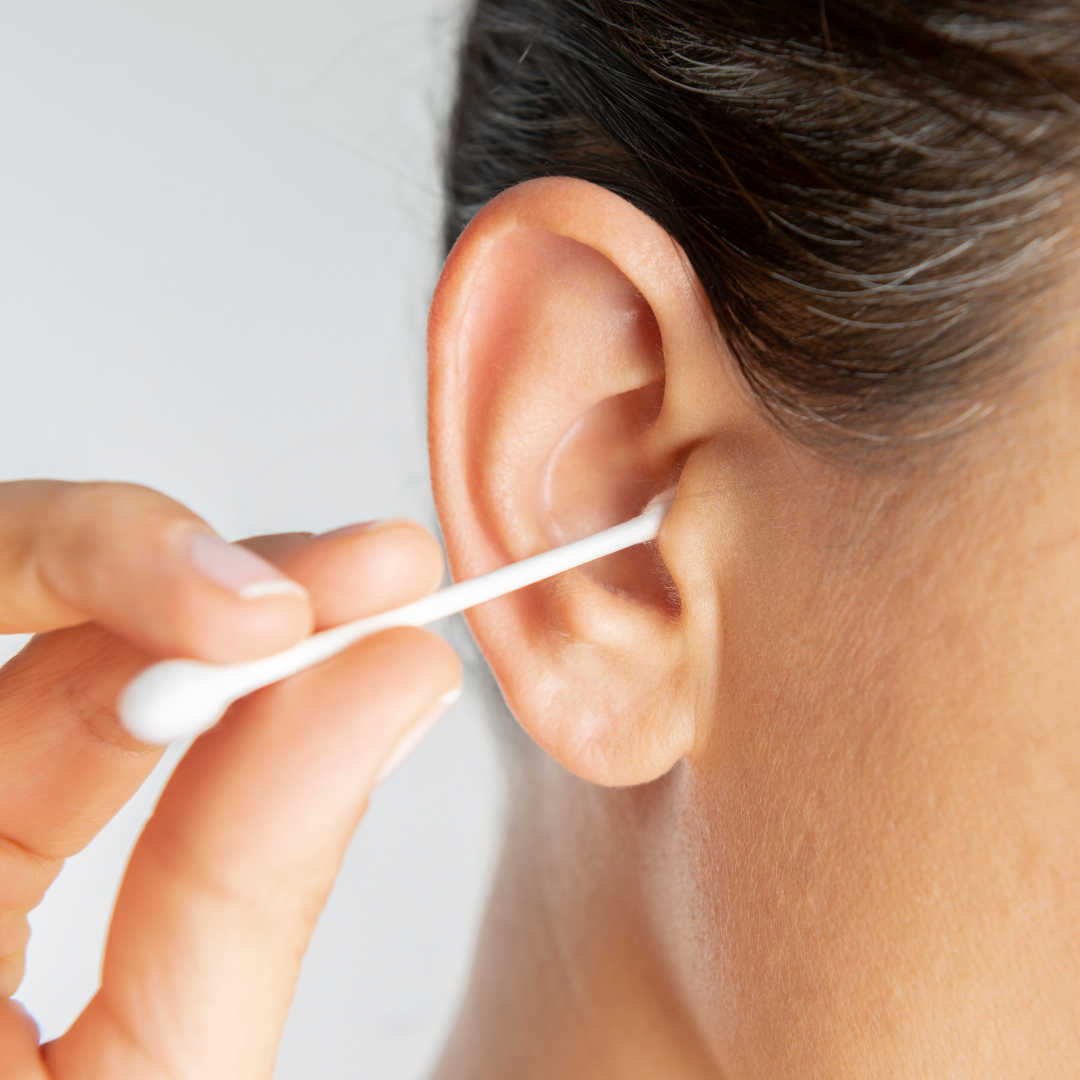
Even though cotton swabs seem practical for routine hygiene, probing the inner canal creates deeper impactions and threatens long-term ear health. We assess whether your earwax demands professional intervention and provide customized care strategies that match your clinical profile. Ears don’t always need manual cleaning; however, if wax builds up, we can help patients safely remove excess wax.
Clinical Reasons Why Q-Tips Damage the Ear Canal
Earwax, or cerumen, is not dirt. Cerumen collects particulate matter, inhibits microbial proliferation, moisturizes the epithelial lining, and shields sensitive canal tissues. Routine chewing and epithelial cell migration continuously transport spent wax toward the concha, where it falls out or clears during bathing.
A Q-Tip placed inside the canal can disrupt this self-cleaning process. Even if the swab gathers a trace of surface cerumen, it routinely compacts the remaining mass against the eardrum. Chronic swab insertion frequently compresses cerumen into a dense impaction, triggering a sensation of aural fullness that invites improper cleaning cycles.
Although swabs can sanitize the outer folds of the auricle, they should never penetrate the delicate ear canal.
Clinical Complications Associated with Q-Tip Insertion
The skin lining the ear canal is thin and easily scratched. Minor scratches can trigger localized pain, bleeding, and bacterial infiltration, substantially elevating the risk of otitis externa. The cotton end can also dislodge from the applicator, creating a retained foreign body within the ear.
Documented injuries associated with cotton swabs include:
- Earwax compressed tightly against canal walls
- Skin abrasions, tissue swelling, severe irritation, and active bleeding
- Pathogenic infection involving the ear canal
- Retained cotton tips or foreign debris inside the canal
- Ruptured, torn, or perforated tympanic membrane
- Dislocation or injury of the delicate hearing ossicles
- Temporary conductive loss or permanent auditory changes
- Persistent tinnitus, balance instability, or severe otalgia
Severe injuries are infrequent yet emerge readily if an arm is bumped, the swab slips, or the stick is driven too far.
How Often Should Earwax Get Removed?
Clinical extraction of earwax is not routinely required on a fixed schedule for most patients. Normal anatomical mechanisms steadily push cerumen toward the exterior, where regular washing rinses the visible concha. Overcleaning can dry or irritate the canal and may increase the likelihood of infection or impaction.
Intervention becomes necessary whenever wax creates an anatomical blockage, obstructs otoscopic examination, disrupts hearing aid operation, or causes aural distress.
What Are Safe Ways to Remove Earwax At Home?
When cerumen creates no clinical symptoms, leaving the canal alone remains the most prudent approach. Restrict hygiene to wiping the outer ear folds with a damp cloth while permitting the canal to self-evacuate.
When dry wax demands pre-treatment, we often advise using an OTC cerumenolytic solution or drops composed of glycerin, mineral oil, carbamide peroxide, or saline. Dispense only the directed amount and restrict use strictly to the timeframe specified on the product packaging. Discontinue the product right away if you encounter otalgia, severe dizziness, contact dermatitis, or aggravating symptoms.
Home irrigation is not appropriate for everyone and should only be attempted after a professional confirms it is safe and explains the technique. You must never employ high-pressure dental water jets for ear clearing. Avoid ear candles, metal scoops, camera-guided tools, hairpins, and home suction devices. These questionable products can burn sensitive tissues, lacerate the canal, rupture the eardrum, or compact wax deeper.
When Is Professional Earwax Extraction Necessary?
Schedule a professional visit if the canal remains occluded after softening treatments, cerumen appears deeply lodged, or home remedies fail. Seeking professional care is essential if a patient cannot stay still, exhibits narrow canal anatomy, wears hearing aids, or possesses medical risks that rule out drops or flushing.
Schedule an ear exam promptly if you experience:
- Persistent otalgia, stubborn itching, or painful sensitivity around the ear
- Hemorrhagic discharge, purulent fluid, clear otorrhea, or foul-smelling drainage
- Fever or swelling around the ear
- Sudden-onset tinnitus or vestibular dizziness
- Sudden hearing drops or auditory deficits that remain after wax removal
- Concern regarding a perforated eardrum or foreign cotton debris
- Recurrent impaction that affects hearing devices
You should always treat sudden unilateral hearing loss as an urgent medical emergency instead of assuming simple cerumen occlusion. Early hearing testing easily separates a physical wax impaction from a critical inner ear condition.
In-Office Procedures for Clearing Earwax Blockages
We initiate the appointment by visualizing the canal through a diagnostic otoscope or microscope to verify wax presence and check for signs of infection, laceration, or eardrum tears. The safest removal method depends on wax consistency, canal anatomy, medical history, previous surgery, and the patient’s ability to tolerate the procedure.
Expert removal procedures include:
- Topical cerumenolytic drops applied prior to or during the clinical visit
- Regulated mechanical irrigation with body-temperature saline for sealed eardrums
- Safe, gentle suction extraction executed under direct microscopic guidance
- Manual removal with a loop, curette, or small forceps
Visual guidance empowers the clinician to protect delicate canal skin and pause immediately if sensitivity is detected. You may need more than one method for dry or tightly packed wax. Once the wax is cleared, we reexamine the ear to ensure the auditory canal and eardrum remain completely healthy. If aural fullness, ear ringing, dizziness, or auditory impairment remains after cleaning, further diagnostic evaluations can identify the root issue.
Request an Appointment for Clinical Earwax Removal
When your ears feel plugged or you notice auditory changes, schedule an appointment with our specialists instead of grabbing a cotton swab. Your scheduled visit includes reviewing active symptoms, past ear procedures, hearing aid status, home management methods, and individual risk factors for cerumen impaction. Contact our office directly to book your safe cerumen-removal appointment.