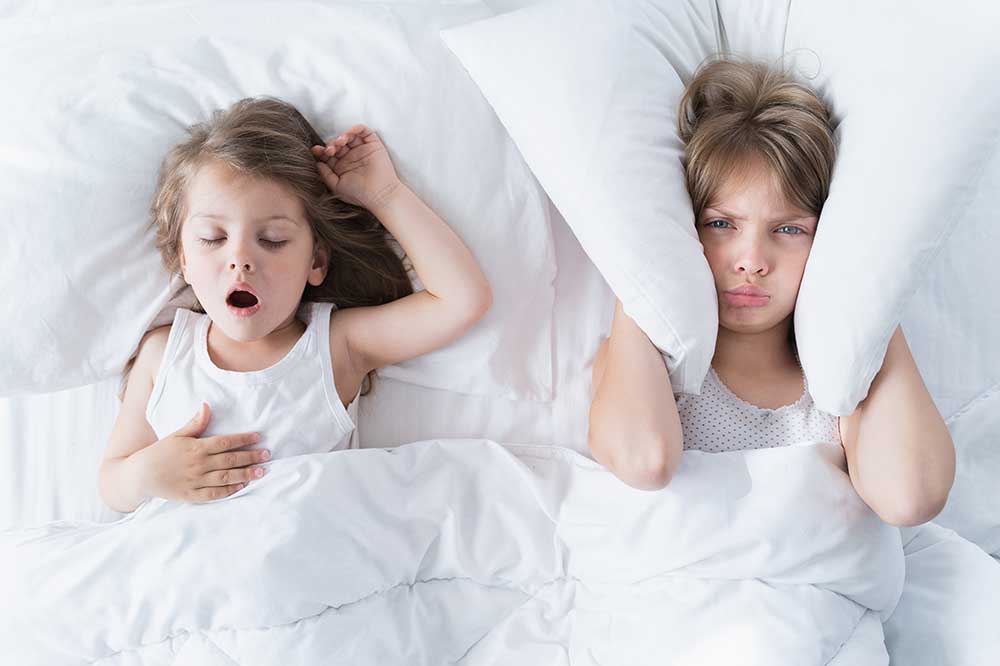
Plenty of children snore, and most of the time it’s harmless. Still, it’s worth paying attention to how often your child snores and how loud it gets, because frequent snoring can point to breathing problems during sleep. At Coastal Ear, Nose & Throat, board-certified otolaryngologist David S. Oliver, MD, FACS, FAAOA and physician assistants Amanda Lowe, PA-C and Carissa Feitel, PA-C provide pediatric ENT care at our Savannah and Pooler offices.
Our team can evaluate your child’s nose, throat, and airway, identify what’s causing the snoring, and help your family decide whether treatment is needed. When snoring disrupts sleep, the right treatment can help restore your child’s daytime energy and mood. Call our Savannah office at 912-355-2335 or our Pooler office at 912-450-2336 to schedule an evaluation.
What Causes Snoring in Young Children?
Snoring in young children happens when airflow through the nose and throat is partly blocked during sleep, making the tissues of the airway vibrate. The most common causes are enlarged tonsils and adenoids, nasal congestion from colds or allergies, and structural differences in the nose, mouth, or throat.
Children may snore for several reasons, including:
- Enlarged tonsils or adenoids
- Colds, respiratory infections, or seasonal allergies
- A deviated septum or enlarged nasal turbinates
- A narrow palate, small jaw, or narrowed voice box
- Being overweight
- Asthma or certain medical conditions, such as Down syndrome or cerebral palsy
Sleep position matters too. Children are more likely to snore when sleeping on their backs than on their sides or stomachs.
When Is a Little Snoring Nothing to Worry About?
A little snoring is usually nothing to worry about when it’s light and occasional, which is common in children and often normal, especially during a cold, an allergy flare, or a respiratory illness. Quiet snoring that comes and goes, and doesn’t disrupt sleep or affect daytime behavior, usually doesn’t need treatment.
Snoring during a cold or respiratory virus may last a few days or weeks and typically resolves once the congestion clears. It may also vary through the night depending on sleep stage and position.
Snoring without breathing problems or other symptoms is called primary snoring, and about 10% to 20% of children have it. Newborn snoring is also usually harmless and often improves as the airway matures or congestion clears. However, snoring that continues for three months or longer should be evaluated, even if your child has no other symptoms.
Could Loud Snoring Mean Your Child Has Sleep Apnea?
Loud snoring may mean your child has obstructive sleep apnea, a pediatric sleep disorder, when it comes with gasping, choking, or pauses in breathing that disrupt sleep and can affect a child’s behavior, learning, and health. Harmless snoring, by contrast, is light, temporary, and doesn’t interrupt sleep.
Sleep-disordered breathing ranges from loud, disruptive snoring to obstructive sleep apnea (OSA), in which breathing stops for 10 seconds or longer during sleep. Between 25% and 40% of children experience some form of sleep-disordered breathing, while about 2% to 4% have OSA.
Nighttime signs of a sleep disorder may include:
- Loud snoring that can be heard from another room
- Pauses in breathing, gasping, choking, or snorting
- Restless sleep or frequent waking
- Mouth breathing
- Night sweats, nightmares, or teeth grinding
- Bedwetting in a child who was previously dry at night
Daytime signs matter just as much. Children with sleep-disordered breathing may wake up tired, need naps, or struggle to concentrate at school. Some show hyperactivity, irritability, or behavior problems that can resemble attention disorders. Over time, poor sleep can affect growth, development, and learning.
When Should Your Child See an ENT in Savannah or Pooler for Snoring?
Your child should see an ENT if snoring is loud, happens most nights, lasts three months or longer, or comes with gasping, pauses in breathing, restless sleep, or daytime tiredness and behavior changes. Your pediatrician may provide a referral, or you can schedule directly with a pediatric ENT.
Parents often grow so used to a child’s snoring that it no longer seems unusual. An evaluation can show whether the snoring is harmless or a sign of a breathing problem that needs treatment.
During the visit, Dr. Oliver or one of our physician assistants reviews your child’s symptoms and sleep habits and examines the nose, mouth, and throat for enlarged tonsils, adenoids, or other blockages. A flexible camera, called an endoscope, may be used to view the airway more closely. If sleep apnea is suspected, our ENT team may recommend an overnight sleep study to measure breathing, oxygen levels, and sleep quality.
What Can Be Done to Treat a Child’s Snoring?
Treatment for a child’s snoring depends on the cause and severity, and options range from managing allergies and congestion to removing enlarged tonsils and adenoids. For children with obstructive sleep apnea, tonsil and adenoid removal is often the first-line treatment, while CPAP may be used in some cases.
For mild snoring, try these simple measures:
- Encourage side or stomach sleeping
- Use a humidifier or saline nasal spray
- Reduce allergens with regular bedding washes and an air purifier
- Treat seasonal allergies with appropriate medication
For children over age three with sleep apnea and enlarged tonsils or adenoids, removing the tonsils and adenoids is a common first-line treatment, and many children go home the same day. Overweight children may also benefit from weight management guided by their pediatrician. If surgery isn’t an option or symptoms continue, CPAP therapy can help keep the airway open during sleep.
After treatment, many children sleep better and show improvements in behavior, attention, and development. Because about 20% of children may still have sleep concerns after surgery, Dr. Oliver may recommend a follow-up sleep study to confirm results.
Schedule Your Child’s Snoring Visit at Coastal Ear, Nose & Throat
If your child snores loudly or shows signs of disrupted sleep, Dr. Oliver, Amanda Lowe, and Carissa Feitel can examine your child, identify the cause of the snoring, and help determine whether treatment is needed to support healthier sleep.
Call our Savannah office on Commercial Drive at 912-355-2335 or our Pooler office on Blue Moon Crossing at 912-450-2336, or request an appointment with Coastal Ear, Nose & Throat to schedule a pediatric ENT appointment.